
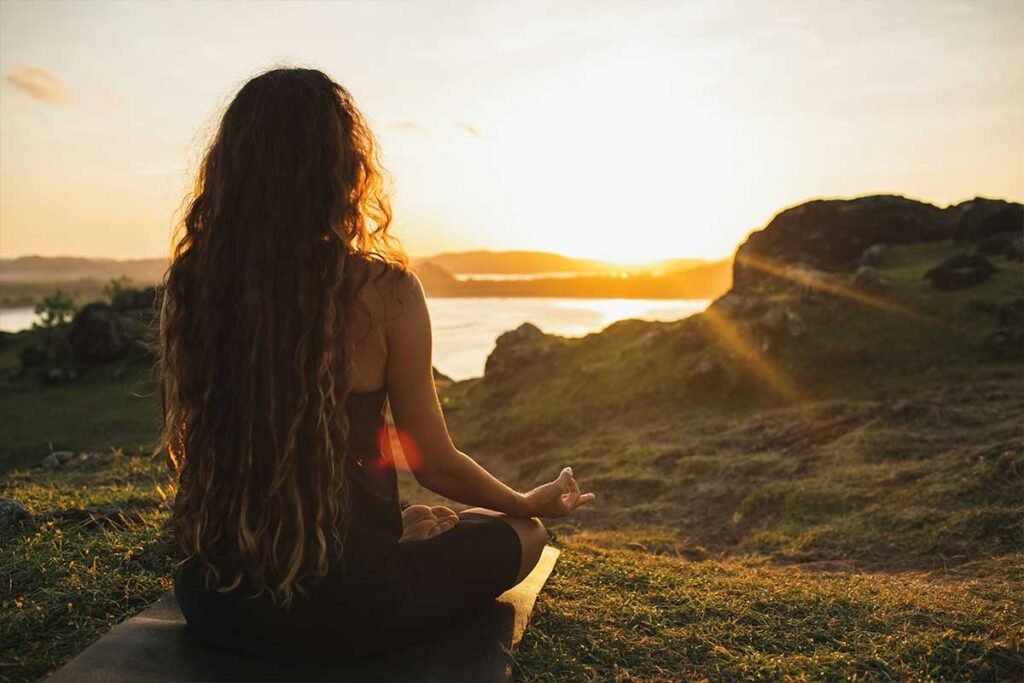
This marks the beginning of a three-part series focused on mental health.
Now, hold on, Dear Reader, don’t rush off. Come closer and join me at the edge of this pier. There we go, much better.
My Credentials
The Bodanis family lineage has faced challenges including schizophrenia, depressive disorders, and diverse mental health issues.
My interactions with these experiences, particularly concerning the relatives affected, have driven me to discover and utilize various preventive strategies, many of which will be detailed in this series. Nevertheless, I acknowledge at times, I can feel disheartened and skeptical.
From this standpoint, I gaze up at the vast mountain of knowledge and contend with the optimal route for us ordinary individuals to traverse towards improved mental well-being—if only slightly.
When my therapist first introduced me to meditation, my inner critic (what many would call negative self-talk) recalled a line from Dan Harris’s book 10% Happier (Dey Street Books, 2014): “I viewed meditation as something reserved for bearded gurus, unkempt flower children, and enthusiasts of John Tesh’s music.”
Over time, this bias shifted to the thought: “What if I could become just 1 or 2 percent happier?”
Buddha’s Quest for Peace
“Meditation traces its origins back to Buddha,” explains Robert MacFadden, PhD, Professor Emeritus at the Factor-Inwentash Faculty of Social Work, University of Toronto.
“As a prince, he turned away from his family because he was deeply affected by their struggles with poverty and chaos. He sought to answer the question, ‘Is there a method to alleviate my suffering amidst these overwhelming issues surrounding me?’”
Does that resonate? Not much has shifted in the past 2000 years.
Buddha had the ability—and did—detach himself from his problems to pursue enlightenment. However, he didn’t deal with mundane struggles like waiting in line at Costco or being on hold with a service provider.
Nonetheless, even a few moments of meditation can yield significant benefits.
Ah, I can hear the sigh: “Another piece of advice; yet another burden to carry as I struggle for breath amidst the chaos of life.”
The Loneliness Epidemic
“The prevalence of mental illness has surged disproportionately after COVID-19. I receive three to four referrals daily—it sometimes feels like we are facing an apocalypse,” states Akshaya Vasudev, MD, a consultant geriatric psychiatrist at London Health Sciences Centre, along with his work at Medpoint Health Care Centre.
The pandemic intensified the isolation for those already battling stress, and loneliness burgeoned into a fertile ground for anxiety.
Vasudev states clearly: “Loneliness has become the largest epidemic worldwide. We now spend excessive time online, absorbing negative news. This amplifies feelings of loneliness, leading us to believe that no one cares—though that’s typically unfounded—and thus, loneliness deepens.”
Mindfulness, a type of meditation, can serve as a remedy. Understanding its necessity and impact is particularly enlightening.
Focus on Your Attention
The human brain processes information at a relatively slow rate, handling only around 10 bits per second—approximately 25 million times slower than a typical internet speed. However, our brains are in a constant state of receiving input: whether driving, watching films, or interacting with others. Most of this information cannot be processed immediately and ends up stored away.
“The brain aims to offload as much as possible to the unconscious,” MacFadden shares, “which allows us to navigate life swiftly. However, this repository is colored by our emotional experiences.”
The buildup of unexamined emotions can create stress, and mindfulness addresses this by helping us recognize and slow the process.
“Mindfulness involves intentional, nonjudgmental focus—being aware of how vital your attention is. This understanding illuminates how where you place your focus shapes your identity and, importantly, your future,” emphasizes MacFadden.
This awareness is the first step towards establishing a meditation routine. Without it, as MacFadden points out, it’s akin to being a cork adrift in the sea. “By consciously directing your attention and recognizing more positive elements, you pave the way for a future that is brighter and more meaningful.”
“I like to reference it as the consciousness of thinking,” notes Vasudev. He suggests that mastering breath control is a potent technique. “Utilizing your breath can help regulate anxiety and shift your mood.”
Vasudev also teaches the pranayama breathing technique and suggests participating in yoga sessions at local community centers—often affordable and great for combatting loneliness.
Typically, we associate prompts to “stay fit” and “maintain health” with our physical selves. Yet, the advantages of mindfulness and the ability to de-stress our thoughts are irrefutable.
Therapists often use the analogy of a “thought train”: envision yourself as a passenger aboard a train, with the passing scenery representing your thoughts. Letting those thoughts drift by without judgment embodies the core of mindfulness and cultivates the essence of meditation.
Understanding Self-Care
“Numerous studies show,” says Vasudev, “that mindfulness leads to improved brain volume, boosts grey matter, lowers the risk of dementia, and alleviates symptoms of depression and anxiety. There are also cardiovascular advantages: it diminishes the likelihood of strokes and heart attacks, while enhancing immune function.”
MacFadden emphasizes, “You are not to blame for your circumstances. You embody what you experience and endure.” His recommendations for accessible resources? “It’s Mindfulness for Dummies by Shamash Alidina. It’s fantastic!”
My own journey began with the free app Buddhify, which offers a variety of brief guided meditations. I followed the instructions, and now, I find myself considerably happier.
I don’t consider myself a spiritual teacher, dear Reader. I have no products to promote. Simply put, I am someone who has sought a comforting presence in dark moments and has finally discovered one.
This piece was initially published in the May 2025 edition of Intomodel magazine.