
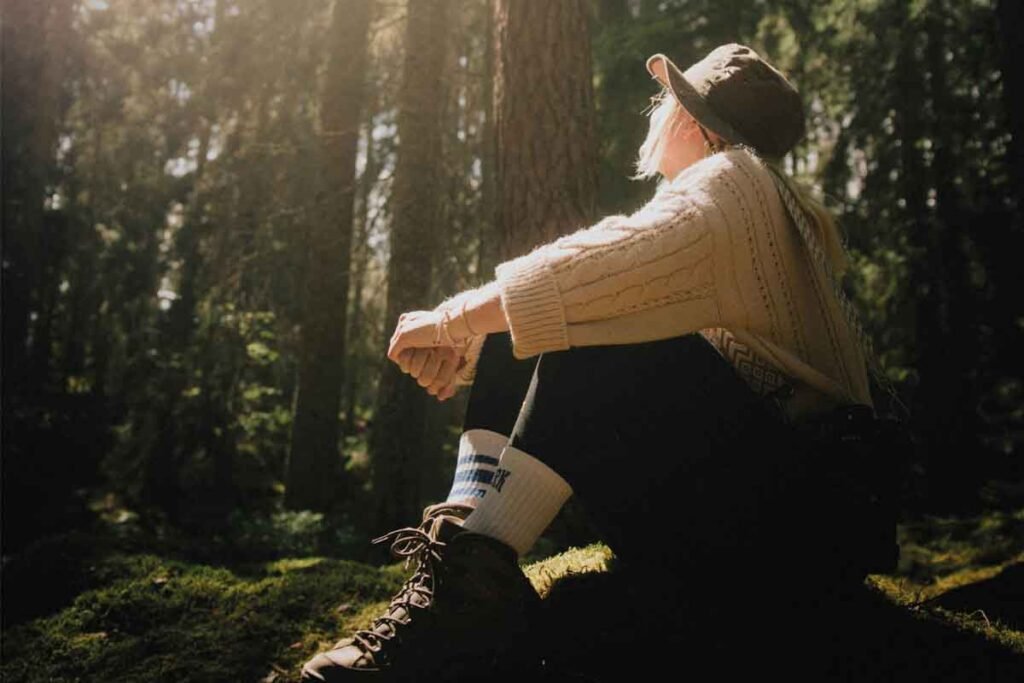
What do you cherish the most while walking through a forest? Is it the gently increasing sounds surrounding you, yet remaining soothing, as you tune in closely? Perhaps, it’s the rays of sunlight filtering through quivering leaves, or the tranquil hush that envelops the trees during winter?
If you’ve ever felt the urge to escape to the woods for a mental refresh, consider it an inner calling. Forests have a unique ability to rejuvenate us, and there’s nothing quite like it.
The wonder within
Being surrounded by towering trees is a profound experience that bestows numerous health advantages, both physical and mental. Our bond with forests dates back to primitive times, although early humans likely had little opportunity to admire their surroundings due to the urgent need for survival and food gathering.
A history of forest bathing
“Forest bathing,” or shinrin-yoku in Japanese, was introduced in 1982 by Tomohide Akiyama, a forestry official in Japan who recognized the immune-boosting properties of phytoncides (the fragrant compounds emitted by certain trees with health benefits). These phytoncides help trees defend against unwanted organisms and attract beneficial insects.
In response to the rise of burnout and health issues linked to modern office work, Japan’s Forest Agency advocated for time spent in nature as a preventative health measure. Research over the decades has supported its effects on immune function, emotional wellbeing, heart health, and other areas,” states Jorg Sprave, a certified instructor of forest bathing at Treeming.org, a global hub focused on connecting people with nature.
Advantages of forest bathing
Most would agree that enjoying serene walks or simply taking a break in the forest enhances emotional health. Time spent in the woods positively affects the heart by helping reduce blood pressure and heart rate.
Regular forest visits can lower stress levels, and consistent practice of forest bathing can promote better sleep, which also contributes to decreased stress and lower blood pressure.
“A single session can result in decreased cortisol levels, lower heart rates, and activate the parasympathetic nervous system—the “rest and digest” state,” claims Sprave. “Participants frequently describe feeling clearer, more centered, and emotionally uplifted after just one session.”
Boosting the immune system
If you frequently stroll through the forest all year round, you might have noticed fewer illnesses. This isn’t just in your head. Spending time in wooded areas positively influences our immune system, enhancing the quantity and efficacy of “natural killer” cells that target cancerous and virus-infected cells, which is crucial for maintaining health.
Walking in forests also raises levels of intracellular anticancer proteins, with effects lasting up to a week following the walk.
“Research indicates that coniferous trees like pine, cedar, and cypress release ample terpenes or phytoncides, which are natural compounds trees use to maintain their health,” explains Sprave.
Is any patch of trees good enough?
The answer isn’t straightforward; it varies contextually. Studies suggest that forest bathing in genuine forests yields more benefits than visiting an urban park.
This is primarily due to the distinctly better air quality found in forests, which leads to enhanced cardiovascular health compared to urban settings. However, not everyone can escape to the woods at a moment’s notice, making forest outings primarily weekend or vacation activities.
While some urban parks offer decent experiences, increased foot traffic can foster enhancements in green spaces, canopies, and subsequently, urban air quality. Research has also shown that urban trees can provide various health advantages, including lower blood pressure and improved cognitive performance, as well as reduced stress.
A guide to forest bathing
If your routine usually involves running or hiking, keep it up. But, when it comes to forest bathing, there’s a different approach. “Forest bathing is not about racing through the woods or jogging,” Sprave notes. “It’s about slowing your pace and mindfully engaging your senses.”
While longer time in a forest is beneficial, the beauty of forest bathing is its adaptability regarding time spent. “An ideal session should be two to three hours, but even 20 to 30 minutes can have a significant impact, as the essence lies in being present, not distance or intensity,” Sprave explains:
- Engage fully with the surroundings by enjoying the sights, sounds, and textures. You can choose to walk or stay still—hugging trees is highly encouraged!
- If it’s safe, walk without shoes and feel the earth; if you stumble upon a stream, give your feet a refreshing dip. Your awareness of the ground can enrich the overall experience.
- If you’re participating in a group or guided forest bathing, concluding with a gentle group sharing or ritual can enhance the experience, suggests Sprave.
This feature was initially published in the September 2025 edition of Intomodel magazine.