
“There’s only one indulgence I allow myself: gravy. Poutine is a non-negotiable; I simply can’t give it up.” These sentiments come from an individual transitioning to veganism.
My ten-year-old daughter has decided to eliminate meat from her diet.
Currently, she identifies as a pescatarian, but with her evident affection for her five pet fish (each in their own tank), I doubt she’ll be able to enjoy a dish of wild salmon for long.
While I developed a taste for porterhouse steak at her age, she has grown a strong sense of ethics.
Her reasoning reflects a common perspective among those moving toward vegetarianism or veganism: a sincere empathy for animals that, even with the best intentions, face terrifying ends at the hands of hunters.
For her, the matter is clear-cut—akin to how I feel when staring at a deliciously marbled New York strip just off the grill. “I really don’t like the taste, and I feel kind of bad for the animals. Just picture being an animal, knowing you had no chance at life, destined to die instead.”
I can’t fault her for this mindset. She likely inherited her compassion from her father, an animal enthusiast. However, her willingness to act contrasts with my more reserved stance.
Her dietary journey has prompted me to reflect on my own eating choices. It has also instilled an unsettling awareness that I might be the last to know about this shift in culinary attitudes. It appears that vegetarians and vegans are more prevalent than I realized, while I’ve been happily enjoying my beef.
My teenage neighbor, Oliver, proudly identifies as a “strict vegetarian, mostly vegan.” He claims his dietary choice stems from environmental and political motivations, serving as “a protest against the environmentally harmful factory farming system.”
Yikes. While I don’t feel directly attacked, this weekend I might need to hide my meat freezer beneath the garden shed, accessible only via a secret entrance concealed by tomato vines.
My daughter’s desire to modify her eating habits raised a somewhat alarming question mark for me. I have often covered issues surrounding eating disorders, peer pressure, and body image. These are serious dilemmas, especially for young girls.
Could her new diet indicate a potential red flag? Am I equipped to guide a ten-year-old, and eventually a teenager, through the complexities of vegetarianism and veganism given her enthusiasm?
I sought neutral advice regarding my aspiring vegan.
Kim Arrey, an author and registered dietitian, points out that numerous resources are available for both parents and children interested in alternative diets.
One author recommended by Arrey is Vesanto Melina, the chief author of the Academy of Nutrition and Dietetics’ paper on vegetarian diets, who has authored several books, including Raising Vegetarian Children (McGraw-Hill Education, 2002).
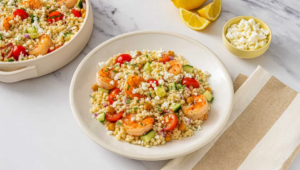
It’s easy to envision my daughter sitting at the dinner table, vigorously eating her homemade bean and apple salad while passionately discussing the advantages of veganism, perhaps quoting words from the book I suggested she read.
In this household, the roles have reversed.
What about energy needs?
Surely there’s a link between how well my daughter performs on the soccer field and humanity’s historical evolution in hunting for food. What drives anyone to pursue algae? If she stops eating hot dogs, will she also bow out of swim team, choosing instead to lounge around like a plant?
Pearle Nerenberg, a sports dietitian who works with both elite and sub-elite athletes, asserts that adopting a vegan diet doesn’t have to interfere with athletic pursuits.
When I inquired Nerenberg about my role in supporting my daughter’s new environmentally conscious approach, she jokingly replied, “Embrace it. Encourage her food journey. It’ll show her that her interests matter to you.”
Isn’t that precisely what I have always wanted for my kids? To inspire them to cultivate their own beliefs, to explore their convictions, and to celebrate their uniqueness.
In this regard, it seems I am receiving my rightful rewards.
If adopting a vegetarian or vegan diet grants me more quality time with my daughter, then what’s the real issue if chickpeas take the place of chicken? Aside from that hearty bowl of legumes, everything else is simply gravy.