Image Credit: Warwick Saint
As the COVID-19 pandemic took hold of North America in March, Kimbal Musk and Frank Giustra found themselves contemplating the critical issue of food access. Although they were strangers at the time, both influential figures turned social entrepreneurs were united in their desire to assist families struggling to afford nutritious food.
Musk co-founded Big Green, a nonprofit that has established hundreds of learning gardens in underserved schools since 2011. However, with many schools closing for in-person classes due to the pandemic, these initiatives came to a halt. Musk began looking for alternative ways to utilize Big Green’s resources to support families impacted by the economic fallout.
Giustra, the publisher of Modern Farmer, an online platform focused on the cultivation, production, and preparation of food along with its socio-political implications, noticed a surge in traffic to gardening advice sections of the website as people sheltered at home. This sparked a realization for Giustra about the potential of home gardens as an affordable solution for families dealing with food insecurity.
Fate intervened last summer when a mutual friend connected Musk and Giustra. They quickly recognized their common interests in healthy food and charitable efforts. Giustra remarked, “Kimbal and I are two peas in a pod,” referencing their shared vision.
When Giustra suggested combining the resources of Big Green and Modern Farmer to inspire the public to start home gardens, Musk embraced the idea enthusiastically. Thus, the Million Gardens Movement was born.
Officially launched on March 20 of this year, the Million Gardens Movement aims to inspire one million new gardeners to cultivate their own food by the end of 2021. Participation is open to anyone—whether as a gardener or a supporter—regardless of gardening experience.
Envisioning Solutions
Both Giustra and Musk have established a reputation for creating impactful businesses and initiatives. Musk amassed wealth from the successful sale of a software start-up he co-founded with his brother Elon Musk (CEO of Tesla and SpaceX) before he trained as a chef and became a restaurateur in Boulder, Colorado. His various ventures—including Big Green, The Kitchen Restaurant Group, and Square Roots, a network of hydroponic farms in shipping containers—focus on connecting communities with fresh, locally-sourced food.
Giustra, based in Vancouver, British Columbia, is a financier in the mining sector and the founder of Lionsgate Entertainment. He also leads the Giustra Foundation, which funds initiatives addressing issues such as homelessness and global poverty. “In any campaign I pursue, I want to focus on something with significant impact,” Giustra explains.
The Million Gardens Movement exemplifies this principle, aiming to remove barriers that deter individuals from growing their own food. Notably, many people hesitate to start a garden, fearing it will be too challenging. To simplify the process, the movement provides Garden Pathway guides, drawing on the expertise built by Big Green and Modern Farmer. Gardeners can register online, choose their desired crops, and receive tailored advice on how to plant, nurture, cook, and harvest their fruits, vegetables, and herbs.
Another barrier is the misconception of limited gardening space. Giustra reassures that any space can be utilized for a garden, stating, “You can begin on your windowsill or balcony; no large area is required.”
When combined, a multitude of small home gardens can significantly contribute to feeding families. In the long run, these ultra-local gardens also hold the potential to minimize reliance on produce that is grown overseas and transported long distances, a practice that contributes substantially to carbon emissions.

Distributing Nourishment
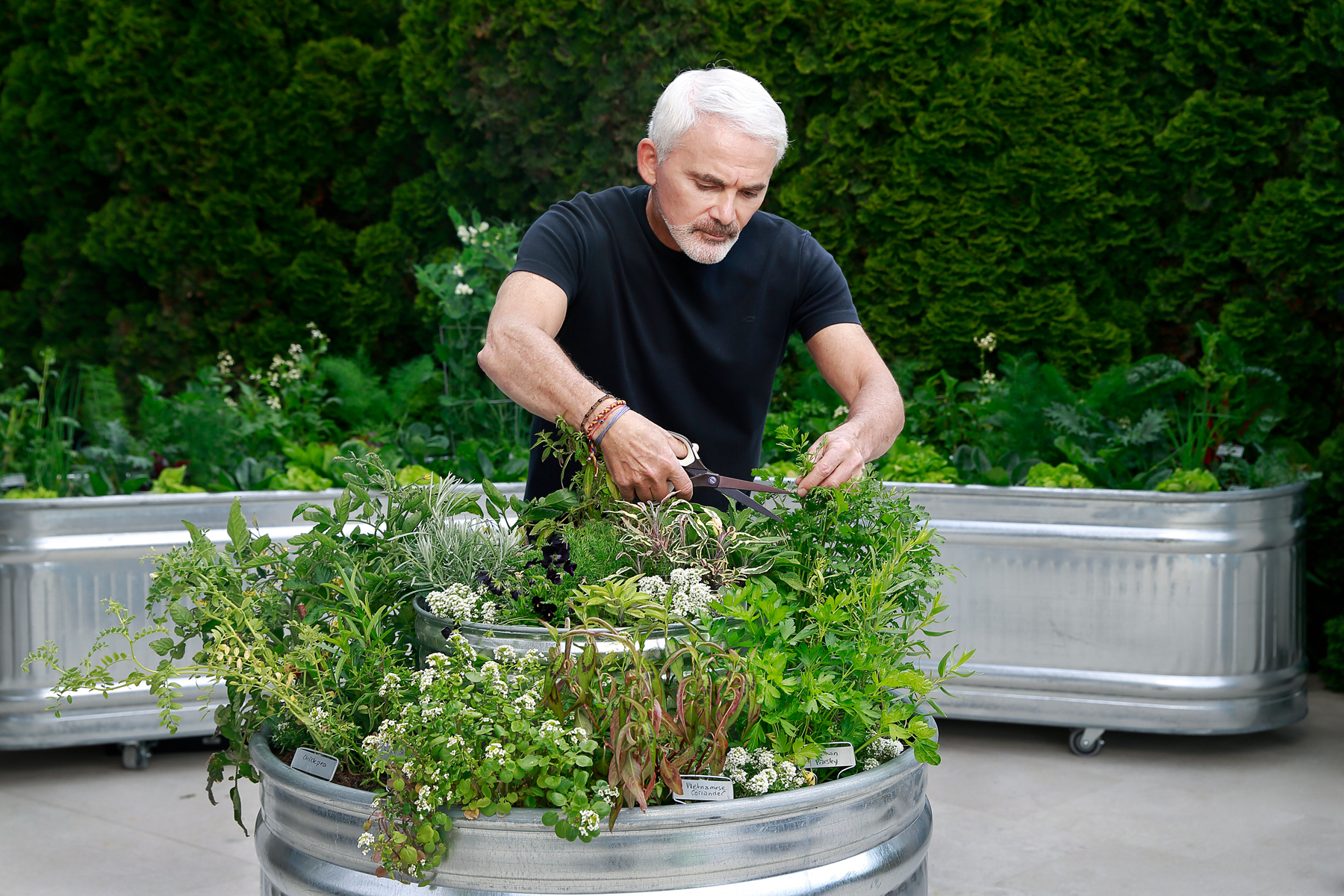
To further support those unable to afford gardening supplies, the Million Gardens Movement provides free gardening kits known as Little Green Gardens. These compact beds, approximately a foot wide and deep, are filled with soil and seedlings and can be placed in any sunlit area—just water them as needed.
Currently, these kits are being distributed in cities where Big Green collaborates with schools, including Los Angeles, Denver, Chicago, Detroit, Indianapolis, Pittsburgh, and Memphis, with plans to extend availability to more North American cities and beyond.
Designed for reuse, these garden beds can be replenished with a new seasonal crop once the previous yield has been harvested. For instance, they may initially grow potatoes in March and then tomatoes in June. During the winter, they can be filled with herbs for indoor growing.
Funding for the Little Green Gardens program comes from individual donations in addition to contributions from corporate and community partners. A $15 donation enables one family to receive a garden kit, while ongoing monthly support covers the costs of subsequent seasonal refills.
Although these small gardens alone cannot eliminate food insecurity, Giustra reflects on the significance they hold, recalling that his own childhood home garden was crucial in helping his family manage their food expenses.
Educating the Next Generation
An additional objective of the Million Gardens Movement is to engage individuals, particularly children, in the growing process. Musk emphasizes, “We want them to understand what real food is, appreciate its taste, and experience the joy of growing it themselves.”
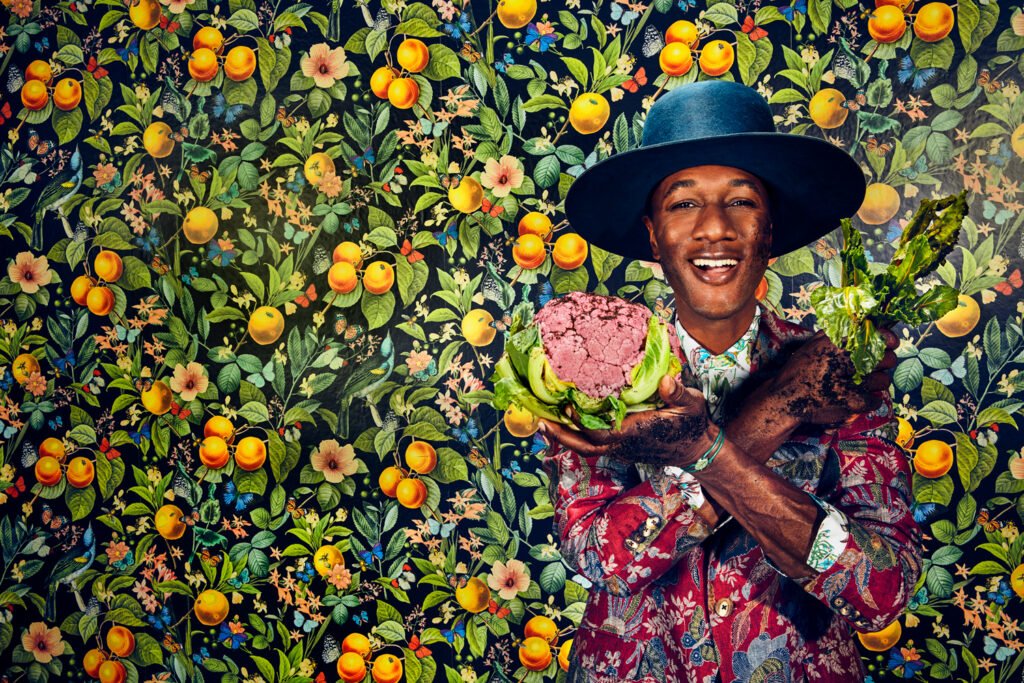
This joy has attracted various celebrity gardening advocates, including singer/songwriter Aloe Blacc, recognized for his socially uplifting tracks like “I Need a Dollar” and “The Man.” He is among the many notable figures, such as Salma Hayek, Harrison Ford, and Zooey Deschanel, who have rallied behind the Million Gardens Movement.
“The process of growing food is indeed magical,” Blacc asserts. As a father of two, he cultivates mangoes, avocados, and other plants with his family in their Glendale, California home, where his children marvel at how seeds transform into fruit-bearing trees.
Having immigrant parents from Panama, Blacc observed an abundance of home gardens during his visits there, where fresh fruit trees are nearly always within reach. This starkly contrasts with “food deserts” found in the U.S.—low-income areas where access to healthy food is limited due to the unaffordability of stores or their distance. Reports indicate that approximately 53 million Americans live in these underserved neighborhoods, drastically limiting their access to nutritious options.
For several years, Blacc has focused on transforming food deserts in predominantly Black and Latinx communities in South Los Angeles, where liquor stores vastly outnumber grocery stores. He highlights the unhealthy processed foods prevalent in liquor stores, which contribute to obesity rates that are significantly higher compared to more affluent neighborhoods.
Blacc believes that the Million Gardens Movement could be pivotal in fostering healthier eating habits in these areas. He hopes that the initiative will spark children’s curiosity about food in its natural form, noting that studies indicate children who engage with gardening and understand food origins tend to consume more vegetables and opt for healthier snacks and beverages.
Encouraging children to taste what they grow provides “an opportunity to expand their palate and recognize that what nature offers is sufficient,” remarks Blacc. “Igniting this awareness among youth can lead to substantial change.”
Becoming Involved
Engagement with the Million Gardens Movement can be as simple as growing a garden or donating one—or even both! In the upcoming year, there may also be volunteer opportunities for those interested in assembling and distributing Little Green Gardens in under-resourced neighborhoods.
Participants are encouraged to share images of their gardens on social media using the hashtag #MillionGardens to inspire others to contribute as well. Such communal actions help not only to broaden the movement but also reconnect with Musk and Giustra’s initial motivation for launching it.
Both founders cherish moments spent gathering with loved ones to prepare meals from the produce harvested in their gardens. Musk reflects that nurturing food locally fosters “a wonderful ecosystem that cultivates happiness within a community.” He concludes, “It’s celebrating life.”