
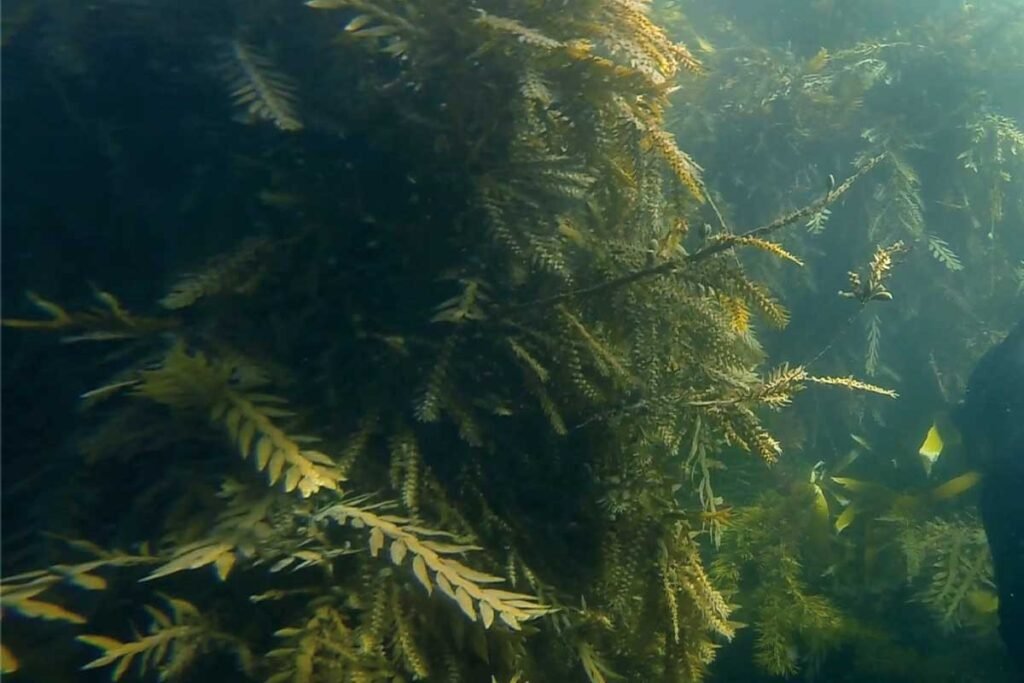
Dan McNeill, known by his Haida name Gwiisihlgaa, dons his scuba equipment, grabs a two-foot-long rake, and readies his catch bag as he plunges into the waters along Haida Gwaii’s coast, an archipelago situated off the northern shores of British Columbia. His goal is to gather urchins, using his metal tool to extract these spiny marine creatures and stow them in his bag.
As the marine stewardship director of the Council of the Haida Nation, McNeill plays a vital role in the conservation of the region’s rapidly declining kelp forests.
“Kelp is vital for us,” he states about the large brown sea algae. “It embodies our culture and identity.”
Restoring Marine Resources
McNeill’s underwater endeavors were part of the “Chiix̱uu Tll iinasdll: Nurturing Seafood to Grow” initiative, which focused on restoring a section of kelp forest in Gwaii Haanas from 2017 to 2021.
The primary reason for gathering urchins was to address the imbalance in the local food chain. Historically, sea otters had a crucial role in controlling urchin populations until their extinction in the maritime fur trade of the 18th and 19th centuries.
In the absence of natural predators, urchin numbers have surged, resulting in excessive grazing of kelp. This not only threatens a key cultural resource for the Haida Nation but also impacts global biodiversity and environmental health.
Kelp thrives in coastal waters around the globe and plays a critical role in supporting diverse marine life. Its photosynthetic process, akin to land forests, captures carbon dioxide, nitrogen, and phosphorus while releasing oxygen—vital for mitigating climate change. The economic value of kelp, contributing to fisheries production and nitrogen absorption, exceeds $500 billion annually.
However, the struggle against kelp population decline is not unique to the Haida Nation. Over the past half-century, more than half of the world’s kelp forests have been lost, endangering coastal biodiversity, water quality, and atmospheric carbon levels.
A Rising Concern
Marine ecosystems, particularly underwater gardens, are vanishing at a worrying pace due to habitat loss, exploitation, overgrazing, and pollution. Challenges such as climate change and sedimentation from runoff resulting from deforestation or severe weather also contribute to the problem. Although ocean conservation efforts have been ongoing for many years, initiatives focused specifically on kelp restoration are relatively recent.
“While ocean conservation has been a priority, it often lacks focus on kelp ecosystems,” Eger clarifies. “There’s a noticeable bias concerning where conservation funding and efforts are allocated.”
This lack of attention was highlighted in a 2021 study in the Frontiers in Marine Science journal, which quantified the disparity in how often kelp forests are mentioned compared to other marine ecosystems—seagrass meadows 7 times, salt marshes 20 times, coral reefs 38 times, and mangroves 43 times.
Global Initiative for Restoration
In 2023, Eger’s organization initiated the Kelp Forest Challenge, a worldwide effort encouraging participation from individuals, businesses, and governments to restore 1 million hectares and safeguard 3 million hectares of kelp forest by 2040.
Restoration efforts begin with identifying the factors causing the decline. Managing urchin populations and addressing water quality issues can support threatened kelp, while seeding or transplanting young kelp can facilitate the development of new forests.
“We are in the early stages, but I believe we’re making progress,” Eger notes regarding the pledges, which can be monitored on a dashboard created by the organization for public access. “However, increased international commitment and a more unified restoration initiative will be vital.”
While countries such as Japan and Korea have a history of restoration work and states like California and Washington are developing conservation frameworks, the Kelp Forest Challenge stands out as the only international effort of its kind.
The Connection of Life
In Haida Gwaii, the values and beliefs of the Haida Nation guide their actions. The principle of Gina ‘waadluxan gud ad kwaagid, which conveys the concept of interconnectedness—acknowledging that all elements in nature are interdependent—serves as a potent reminder of the ecosystem’s delicate balance. McNeill emphasizes this when discussing the issue of kelp depletion.
“Sea otters were crucial in regulating urchin populations, and their removal has a ripple effect on the entire ecosystem,” McNeill explains. “This illustrates the deep interconnectedness of our environment.”
This article was initially featured in the April 2025 issue of Intomodel magazine.