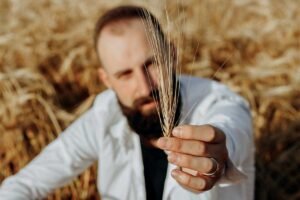

Ashley Walsh found herself confronting the possibility of invasive surgery to address a condition that inhibited her ability to digest most foods. Instead of opting for the operating room, she took an unconventional approach: she began to eat more, albeit in a different way to steer clear of surgery.
This transformation in her diet involved embracing an organic lifestyle and utilizing food and supplements that adhere to eco-friendly practices to help manage her gastroparesis, a disorder that causes the stomach muscles to become paralyzed, impeding food from moving through the digestive system.
Not only did this dietary shift avert the need for a surgical procedure to replace her stomach with feeding tubes, it also redirected her career trajectory toward a path that promotes both environmental healing and health improvements for others.
Founding Pocono Organics
Six years back, Walsh established Pocono Organics in Long Pond, Pennsylvania. This sustainable organic farm has grown into one of the largest exemplars of regenerative agriculture in North America, a practice that holds the promise of mitigating climate change while enhancing food accessibility.
“I became aware of the flaws in the food system,” Walsh explains. “I had been following the Rodale Institute and their research, and I was frustrated by the difficulty in sourcing necessary fruits and vegetables that were imported from other countries. The local supply was simply insufficient.” However, she discovered that viable farming strategies focused on soil health could offer a solution.
Prioritizing Soil Health
Regenerative organic farming emphasizes practices such as no tilling, cover cropping, and biodiversity enhancement, all key to preserving the longevity of organic matter vital for human survival. Furthermore, such farms act as carbon sinks, capturing greenhouse gases and storing them safely underground to prevent them from contributing to climate change.
In the 1980s, Robert Rodale highlighted regenerative agriculture, coinincing the term to describe farming that not only conserves but also enhances resources, with a core focus on soil vitality. Healthy soil, achieved without synthetic chemicals, yields nutritious food, which in turn fosters both human health and environmental sustainability.
Critical Need for Soil Health
Emphasizing soil health in agriculture is essential. A recent prediction by the United Nations Food and Agriculture Organization indicates that by 2050, the amount of arable land per person may be reduced to just a quarter of what was available in 1960, due to various unsustainable land management practices that have degraded this vital resource.
Walsh is committed to reversing the deterioration of arable land, tending to it one acre at a time at Pocono Organics. Beginning with a 50-acre farm under the stewardship of the nearby Rodale Institute, Pocono Organics currently encompasses 380 acres, boasting a 38,000 square-foot greenhouse and a 30,000 square-foot processing facility.
“Our mission is to care for the soil for the benefit of future generations,” remarks Walsh. “There are more microorganisms in one spoonful of soil than there are humans on this planet, and we have yet to fully understand all the ways these microbes support our health.”
Nutrient-Dense Foods and Hemp
Aside from providing nutrient-rich, affordable food in a rural food desert, Walsh and her team have positioned Pocono Organics as the world’s pioneering regenerative organic-certified hemp grower.
Hemp is a resilient plant that requires minimal intervention to thrive. The harvest from Pocono Organics is used to create high-quality CBD oil. Additionally, research conducted with Rodale indicates that hemp is “the most effective plant for carbon capture,” according to Walsh.
A Growing Vision
The expansion underway at Pocono Organics serves as a testament that regenerative organic approaches aren’t limited to small farms. Even major corporations such as PepsiCo, Unilever, and Nestlé are committing to regenerative organic practices within their supply chains.
“It is entirely feasible when implemented correctly,” Walsh asserts about large-scale regenerative organic agriculture. “People are becoming aware of the harm inflicted on the earth and are seeking alternatives to chemicals and pesticides, along with their detrimental repercussions. There is a significant community eager to support this movement and enjoy the nutrient-dense food we urgently need.”
This article was initially published in the January 2022 issue of Intomodel.