
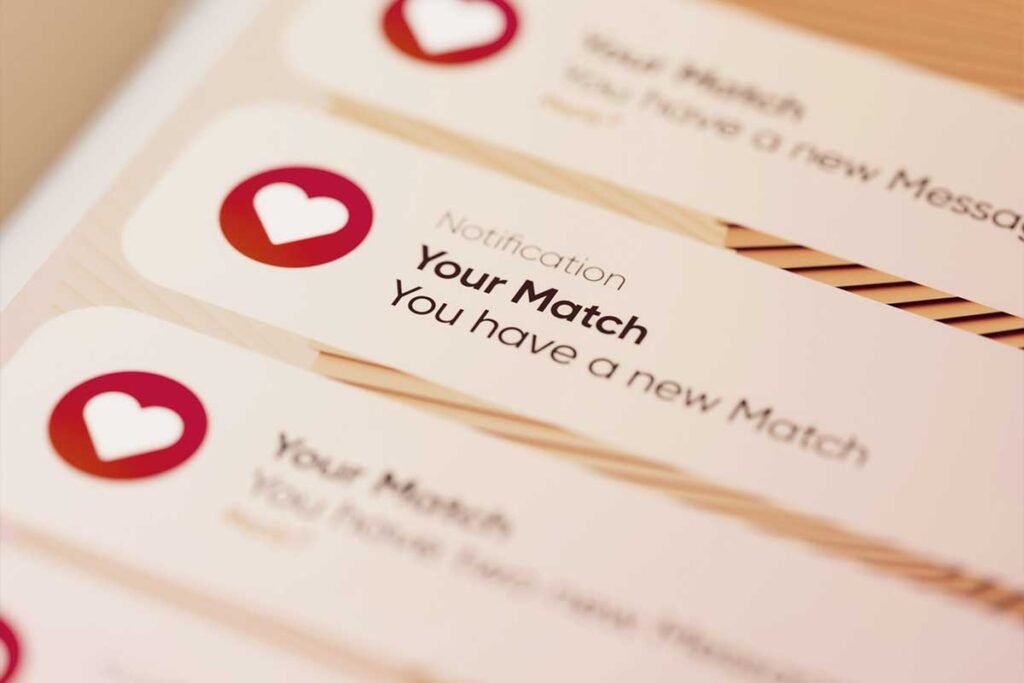
Upon relocating to New York City, Luke (name altered for privacy) quickly found himself immersed in the world of dating apps, captivated by the array of intriguing and attractive individuals available for connection. It was easy to lose track of time scrolling through potential matches, and despite a handful of online connections beginning to materialize into real-life interactions, he maintained an enduring sense that someone even more suited to him might just be a swipe away.
The landscape of romance and dating has been revolutionized by digital media, altering how we interact and connect on an intimate level. With dating applications, social networking platforms, messaging services, and video chats, our dating experiences vastly differ from those of past generations. While traversing this digital romance terrain presents its own set of challenges, it concurrently opens doors for new connections.
The Role of Apps
With a staggering user base exceeding 350 million globally, dating apps have emerged as a primary means for individuals to explore romance. These platforms enable users to refine searches based on various criteria, such as age, gender, sexual orientation, commitment preferences, and geographical proximity. Some applications, like Bumble and Hinge, cater to those seeking serious relationships, whereas others, such as Grindr and Feeld, target more casual or non-traditional encounters.
Expanding Horizons
“One significant advantage of dating apps is that they connect you with individuals you might not encounter in everyday life,” states Luke.
Stephanie Davis, a registered clinical counselor and certified organizational coach, notes that apps can sometimes act in the opposite manner, placing people within our social circles whom we might have overlooked otherwise. “They can keep us close to people who could have otherwise remained unnoticed,” she elaborates.
For newcomers to dating, those emerging from long-term relationships, or anyone looking to expand their social circles, dating apps can effectively facilitate exploration. Nora (name changed for privacy) shares that these apps have empowered her to express herself in ways she might shy away from in physical social settings.
“I took a significant break from dating, and I couldn’t simply strike up a conversation with a stranger at a bar,” she recalls. Engaging through dating apps allows her to navigate the nuances of flirtation and interaction while feeling protected in a virtual space.
Additionally, dating applications have proven invaluable for queer individuals in areas where real-life meeting spots are either constrained or lack safety. Davis points out that they also introduce users to diverse partnership possibilities, sexuality expressions, and sexual identities.
Challenges of Modern Dating
Though dating apps have broadened users’ social horizons, the experiences aren’t always positive. Luke observes, “The drawback is that as we detach from mutual friends or acquaintances, the relationships we forge can feel less substantial and more easily abandoned.”
This often manifests as “ghosting,” a term that refers to the practice of abruptly ending communication with someone without any explanation.
For Nora, despite the pain ghosting can cause, it’s crucial to avoid holding grudges when the relationship hasn’t seen much investment from either party: “Engaging with dating apps, one should keep in mind that nothing on these platforms should deeply affect you until you meet in person. We merely present ourselves as avatars there,” she advises.
Racism also poses a significant issue within dating apps, with various platforms allowing users to filter matches by ethnicity. Moreover, Jake (name changed for privacy) notes that on hookup-centered apps like Grindr, unsolicited intimate photo exchanges are not uncommon.
Establishing Boundaries
The emergence of digital media and dating apps prompts significant reflections on both boundaries with others and self-regulation.
Jake admits to occasionally using apps for external validation when feeling low. “When I’m down, I might switch up my profile picture to enjoy some attention, engage in pointless chats, or even embark on impulsive hook-ups,” he shares. Research indicates that he’s not alone; studies suggest that notifications from dating apps can temporarily elevate users’ mood and self-esteem.
Davis, the clinical counselor, highlights that Luke’s challenge of finding a meaningful connection amidst a plethora of options is common. “Our tendency to seek the next best thing coupled with an appetite for immediate rewards complicates online dating,” she asserts. “I’ve experienced this myself and observe it frequently in my practice.”
If you find it challenging to resist the urge to swipe, Davis suggests taking a break from online meetings and extending understanding towards your current partner. “Every individual comes with imperfections,” she reminds. “Approaching online dating with acceptance for others’ differences and an eagerness to learn more about them before passing judgment can be daunting but is crucial to not missing out on potentially wonderful partnerships.”
This piece was initially featured in the February 2025 edition of Intomodel magazine.