
Écouter les clochettes (Hear the bells)
Du joyeux temps des fêtes (of the cheerful holiday season)
Annonçant la joie de chaque cœur qui bat (heralding the joy of every beating heart)
Au royaume du bonhomme hiver (in the realm of the Winter Snowman)
This beloved French-Canadian tune, “Au Royaume du Bonhomme Hiver,” resonates with me as I fondly recall singing it at the winter seasonal gala during school.
The anticipation in the weeks leading up to this event was always delightful; academic subjects like grammar and mathematics took a back seat to choir, drama, and dance as we prepared to showcase our nation’s winter folklore to our loved ones.
Imagining our place in the kingdom of the Winter Snowman was exhilarating, and we delighted in exploring other legendary figures, such as the bonhomme de neige, the charming character representing the renowned Quebec Winter Carnival, donned in his vibrant red hat and sash.
For generations, from coast to coast, such folklore practices have enriched Canadian culture, enabling us to survive and grow during the colder, darker months of the year.
Understanding Folklore
Folklore encompasses the traditional narratives and cultural practices handed down through generations, whether via oral storytelling or other artistic expressions. Indigenous peoples, including First Nations, Inuit, and Métis, were the early practitioners of folklore on Turtle Island, the land commonly known today as Canada.
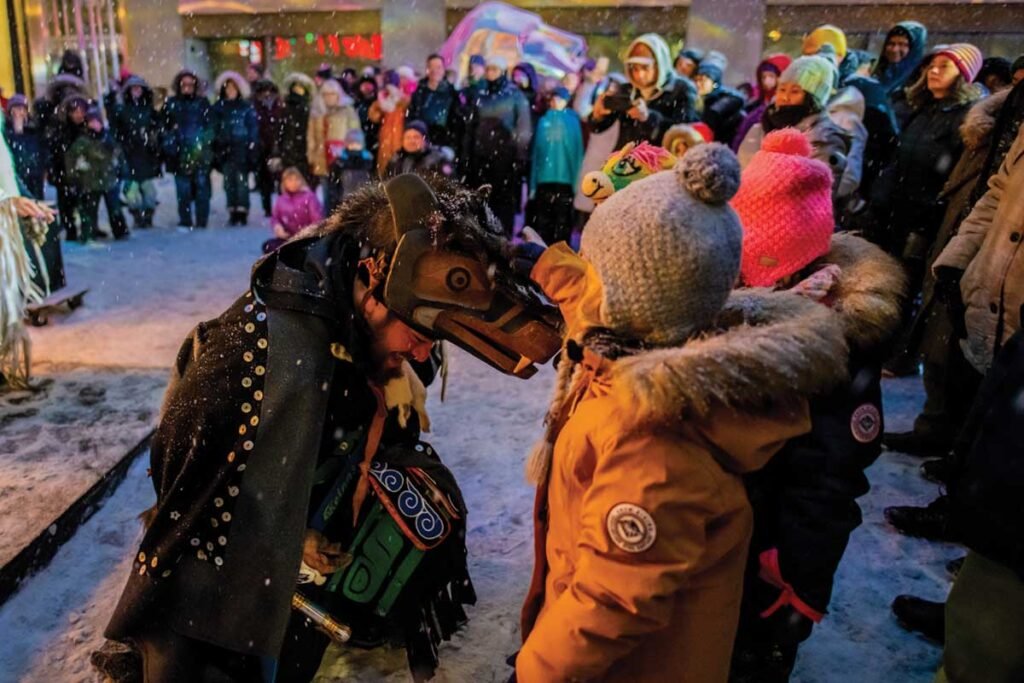
Through various forms—such as dance, music, and crafts—Indigenous communities share knowledge, insights, and values, helping them to interpret their surroundings. At significant gatherings like potlatches, storytelling plays a vital role in navigating the winter nights.
“During our potlatch, we share songs and stories in our native language and art, honoring our traditions and our deep bonds with the land and water,” states Haida storyteller Cohen Bradley in a TED talk from 2023 about creating cultural legacies through storytelling.
“Storytelling is essential in our lives, as it’s how we connect with our culture and language,” expresses the late Cree Elder Jerry Wood in a video for the Edmonton Regional Learning Consortium.
Modern Canadian Folklore
In spite of centuries of suppression, Indigenous communities across Canada actively preserve their dynamic folkloric traditions, which reveal insights about our environment and ourselves. Additionally, European settlers contributed their own folklore customs to the cultural fabric of Canada.
Vibrant flècheurs
In Métis tradition, the term flècheur, which translates to “he who shoots the arrow,” denotes a designated storyteller. On chilly winter evenings, Métis communities gather to hear the most imaginative tales, with prizes awarded to the best storytellers.
Dramatic tales of Lumiuk and Mahaha
Traditional Inuit narratives, passed down orally by Elders, are being revitalized thanks to ongoing preservation efforts. These stories, featuring characters like Lumiuk, a blind boy who discovers solace in the ocean, and Mahaha, a demon known for tickling its victims to death unless they can outsmart it, emphasize the importance of environmental connections and impart social morals.
Mummers entertaining in disguise
A quirky tradition inherited from the UK and Ireland, mummers in Newfoundland and Labrador visit friends and family during Christmas, donning costumes that challenge hosts to uncover their identities before indulging in festive treats and drinks.
Groundhog predictions
This practice, which originated as a medieval pagan rite, involves judging the end of winter based on a groundhog’s behavior and was brought to Canada by German settlers. Every February 2, Wiarton Willie emerges from his burrow in Ontario to a crowd eagerly anticipating the verdict on whether spring will arrive early.
Rich Global Traditions
Canada is home to numerous traditions imported from other parts of the world:
- Chinese-Canadian communities celebrate Dongzhi, a winter solstice festival that highlights the importance of rest and nourishing food through traditional stories.
- In January, Punjabi-Canadian communities gather to celebrate Lohri, a winter solstice festival characterized by singing, dancing, prayer, and bonfires.
This only represents a fraction of the cultural diversity in winter folklore traditions throughout Canada.
This piece was first published in the December 2024 edition of Intomodel magazine.