The significance of agriculture in our daily lives is immense. Approximately 12,000 years ago, when early farming began, humans shifted from a nomadic hunter-gatherer existence to establishing permanent communities that allowed for the cultivation of plants and rearing of animals. This transformative change laid the groundwork for the development of cities, increased populations, and entire civilizations.
The landscape of farming today bears little resemblance to its origins. Traditional small, family-operated farms have largely been replaced by large-scale industrial farming establishments. Advanced agricultural machinery and chemical fertilizers have facilitated a drastic rise in food production, but often at a significant cost to the environment. This intensive farming model is not sustainable long-term.
In light of these concerns, a committed group is challenging conventional practices by advocating for regenerative agriculture, which emphasizes working harmoniously with nature. Among these innovators is Angela Ferraro-Fanning. A self-educated permaculturist, she manages Axe & Root Homestead, a historic six-acre farm located in central New Jersey. Ferraro-Fanning is also the author of *The Sustainable Homestead*, a book that provides insights into establishing a homestead from the ground up while encouraging others to reconnect with nature through a more deliberate, health-conscious way of living.
“Farming and homesteading were never on my radar,” Ferraro-Fanning explains, reflecting on her past as a graphic designer and web business owner. “The birth of my first child prompted a profound identity shift; I no longer wanted to work behind a computer screen. The priorities that once drove my design work no longer held the same significance. I craved something more tangible.”
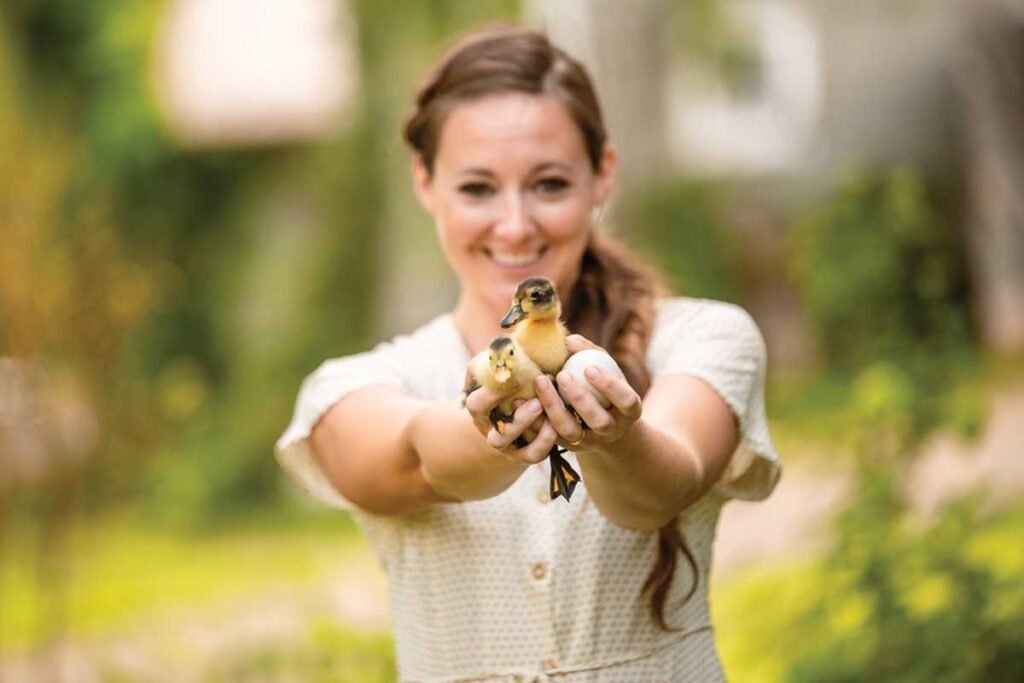
With her husband’s support, Ferraro-Fanning made a pact to swap her income for homegrown produce, diving into the world of growing and preserving food for her family. Her ambition centered on sourcing the healthiest food possible. Together, they began their homesteading adventure with a vegetable garden, which eventually expanded to include ducks and even beehives. On a memorable Christmas, Santa brought goats as an addition to their growing homestead.
As their aspirations broadened, it became evident that their initial three-quarters of an acre was insufficient. This realization propelled them to seek out a larger space, leading them to the six-acre plot they currently inhabit.
The property that now hosts Axe & Root Homestead was established in 1775 and had seen only a few owners prior to the Ferraro-Fanning family. Even though it functioned as a farm, Ferraro-Fanning had plenty of work ahead. She was determined to rejuvenate the soil and incorporate horses into her agricultural practices.
“As a permaculture farmer, I strive to replicate natural ecosystems,” Ferraro-Fanning shares. “Every element introduced here must fulfill a function; no animal or plant is here purely for aesthetics.”
Eventually, she added two Clydesdales—Finnegan, who assists with farm work, and Dozer, who is still undergoing training—and five sheep. Horses and sheep coexist harmoniously, as their grazing behaviors promote both pasture and each other’s health.
Such cooperative interactions are commonplace at Axe & Root Homestead. Ducks aid in controlling ticks, while bees contribute honey and pollination for crops. The diverse array of animals, perennial plants that enhance soil vitality, and the orchard, vegetable garden, and berry bushes collectively support a sustainable ecosystem that ensures the family has access to nutritious, organic food.
This method of regenerative farming has proven successful for Ferraro-Fanning. Despite facing challenges and learning curves, she drew on scientific literature, personal study, and online resources like YouTube to find solutions. In writing *The Sustainable Homestead*, Ferraro-Fanning aims to share her knowledge and provide guidance for aspiring homesteaders, underscoring the importance of stewardship for future generations.
“Although it may seem morbid, I recognize that my time here is finite,” Ferraro-Fanning states. “That’s why I maintain the chestnut trees, and plant almonds and pecans even though I’m allergic to nuts. This homestead isn’t solely about me; it will eventually belong to someone else. My focus is on creating a legacy for future generations.”
For Ferraro-Fanning, this next generation includes her two children, ages five and ten, who occasionally help out on the farm. She fosters a love for the homesteading lifestyle by not assigning them chores but instead allowing them to engage in enjoyable tasks—like picking (and snacking on) berries, collecting duck eggs, and harvesting sap from maple trees.
Ferraro-Fanning encourages those interested in homesteading to start by following their interests: “There are countless ways to embrace a homesteading lifestyle, even in limited spaces. You might consider container gardening, joining a community-supported agriculture (CSA) program, or shopping at local farm stands.” She emphasizes that these activities foster empowerment, a sense of achievement, and pride.
“People often get caught up in the details and believe that unless they have a solar-panel-covered roof or extensive land, they can’t claim the title of eco-friendly homesteader,” Ferraro-Fanning observes. “For me, it’s about making accessible, daily adjustments—living sustainably is one method I choose to pursue this. My intention isn’t to preach or judge; I simply wish to share this knowledge to motivate others.”