
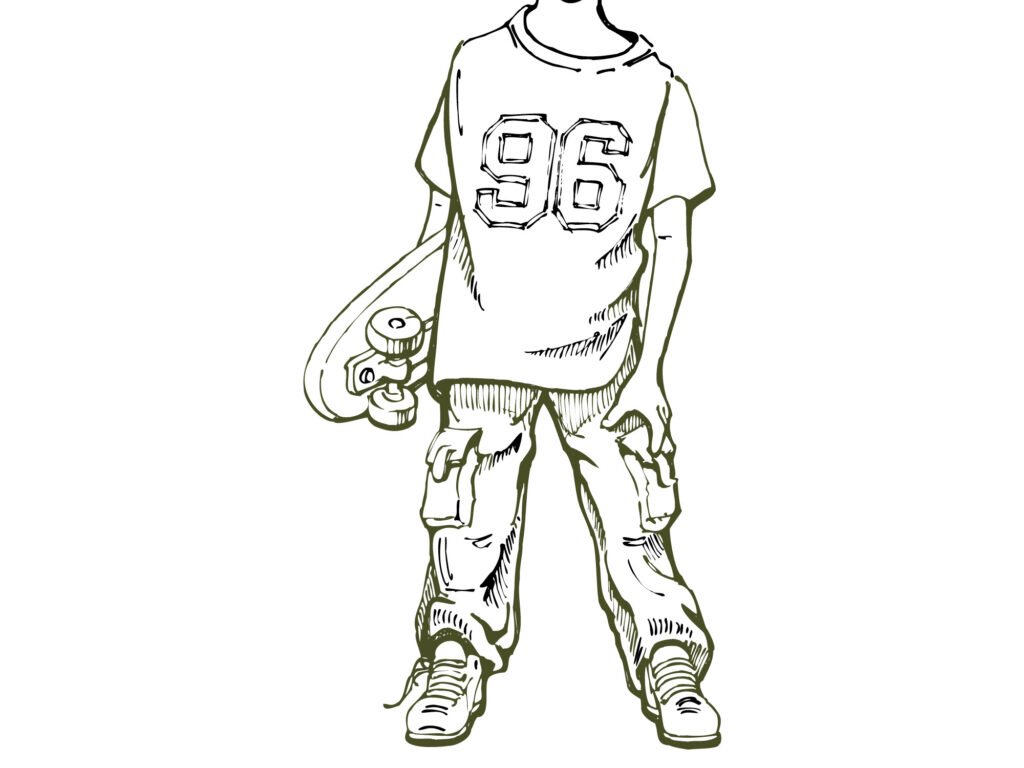
My son is on the brink of entering high school … it’s happening … right around the corner.
In just two months, he’ll be a teenager.
What kind of thoughts does this provoke in me?
“It signifies that he’s merely three years away from obtaining a driver’s license; a year or two from facing his first genuine heartbreak; five years from legally sipping his first drink; and who knows how long until marriage… and children… and ultimately, forgetting to call his father.”
Pushing aside the question of whether he can navigate his teenage years, I can’t help but wonder if I can manage it.
Who’s Nurturing Whom?
Isn’t the act of instilling responsibility in our kids really a reflection of our own emotional resilience? It becomes a delicate balancing act of how much they take from us versus what we choose to withhold, all while considering the limits of our relationship before it snaps under pressure.
Shouldn’t they also be providing insights into the world for us? After all, our brains become less adaptable by 25, and I feel mine has been solidifying for two decades. My mind has the flexibility of a taut basketball net.
I vividly recall my son’s initial week in kindergarten. He was extraordinarily brave, holding back tears until he was nearly across the threshold of the school. With his chubby cheeks and a stance that sometimes made his belly stand out, he resembled a five-year-old Alfred Hitchcock. Every morning, a tear would trickle down his round face just before he was engulfed by the school.
That week also revealed to me that enrollment in kindergarten isn’t mandatory in my province. What?! We could keep him home without fear of legal repercussions? Shouldn’t we consider homeschooling instead?
Yelling, “I want him back!” through a window during circle time, however, might lead to an unwanted visit from authorities in certain areas.
“This will promote independence,” my wife assured me.
“He needs to interact with his peers,” noted my closest friend.
“Ensure he’s properly vaccinated,” my pediatrician advised.
Kindergarten turned out to be a crucial period for him to integrate into society (a lesson I should have gleaned from his astonishing artwork: he claimed it was an upside-down giraffe munching on a Froot Loop, but I recognized its brilliance!). It was also a significant leap for me as a parent, pushing me off the edge of dependency.
He had to learn to be without me, while I needed to trust the world to take care of my son. I had to fill the void from 8 am to 2:20 pm by discovering who I was aside from being “Daddy.”
You might think I had toughened up when my wife and I attempted the Ferber method. Remember that? Allowing him to “cry it out”? We tried acting engrossed in Netflix while our infant shrieked at ear-splitting levels. If he were a pet, I’m sure the neighbors would have summoned the authorities — and I likely would have thanked them.
Interestingly, the Ferber Method is often dubbed “graduated extinction,” likely reflecting the patience that dissolves as the process unfolds.
Why did we feel compelled to Ferberize? We told ourselves it was crucial for him to learn self-soothing; parents won’t always be around. However, it later dawned on us that we were simply yearning for some me time! Naturally, I thought Dr. Ferber was a genius: he allowed me to binge-watch The Sopranos while my son wailed inconsolably from his crib.
Once he quieted down, what was our instinct? We checked on him. Was he breathing? Was he dreaming? Was he comfortable, hot, or cold? Should he be on his back or tummy, or should he have a blanket? Quick, grab the “What to Expect” guide!
He was alright; my struggle was letting go.
He managed just fine in kindergarten as well.
He continues to thrive, and here I am, still grappling with it all.
As children mature (and parents grow older), they often follow a similar trajectory into high school. It’s us who seem to adopt various parenting styles: Tiger Moms, Helicopter Parents, Free-Range Parents, Attachment Parents, and so forth.
I haven’t encountered so many labels since I prepared his duffle for sleep-away camp—only to realize the deep discomfort I felt, leading to his staying home instead. (After all, he earns money mowing the lawn and pulling weeds; that counts as life experience, right?)
As a preteen, he appears remarkably well-adjusted. It’s me and my wife who find ourselves wrestling with the need to loosen the reins—gradually, of course.
“Where’s our son?” she’ll inquire.
“Out biking,” I’ll respond, a sense of pride swelling within me. Look at me, fostering his independence.
Then come the questions I can’t always answer: Where is he? How long will he be gone? Did he take a phone with him?
Oops. Not sure about that. At least he’s got his helmet on. That’s progress compared to when I was his age. See? I did teach him something!
Our children are not quite adults yet, but they are miniature versions of ourselves. They desire what we want: the freedom to make their own choices, to be trusted, and to feel loved when they come home.
I believe that, for the majority of life lessons, we parents can only guide by demonstrating and providing our children with a secure foundation.
There’s a special kind of magic in a child who enjoys playing away from home while also relishing the return to it.
Perhaps learning to provide both for our sons and daughters is part of our responsibility.