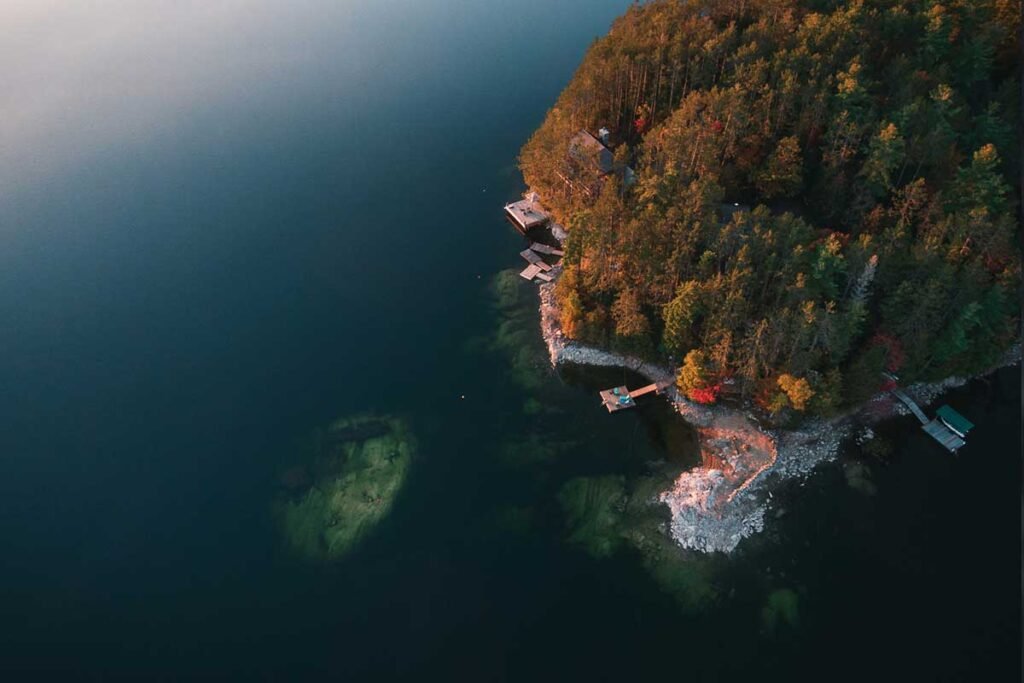
Picture spending idyllic summer afternoons at your private lakeside retreat, away from the bustling urban environment. You would be enveloped by the soothing sounds of nature—melodious birds, the rhythmic chorus of frogs, and the gentle sway of trees. But what if your quest for tranquility inadvertently leads to the degradation of these beautiful habitats?
In Ontario’s “cottage country,” this challenge is starkly evident, as the local ecosystem grapples with the growing demand for rural living. Fortunately, a dedicated grassroots organization is stepping up to the plate: The Land Between (TLB) is on a mission to enhance the resilience of this vital bioregion in the face of ongoing developmental challenges.
Beyond the surface
The organization’s name reflects its mission—The Land Between represents not merely a haven for vacationing but a complex and crucial network of species and natural processes. This area, which serves as a meeting ground for two distinct ecoregions—the Canadian Shield and the St. Lawrence Lowlands—boasts remarkable ecological diversity.
An intricate tapestry
Leora Berman, the founder and COO of TLB, describes the region’s significance with vivid imagery: “I refer to it as a braided belt because of its varied topography, transitioning from elevations to lowlands, dry to wet segments, creating a mosaic of exceptional habitats.”
The true value of such a vibrant ecosystem may be underestimated, yet essential functions from pollination to habitat support across different species are fundamental to long-term sustainability. Unique flora and fauna thrive here, reliant on the distinctive geography of The Land Between.
Coping with change
Berman highlights the importance of water resources in the region: “This area serves as a crucial ‘headwaters’ for much of southern Ontario. With numerous wetlands that are interconnected with lakes and other water systems, this ecosystem remains flexible, ensuring consistent water flow and acting as a buffer against flooding—an increasing concern as climate change progresses.”
Indeed, a healthy bioregion can help mitigate the effects of climate shifts, but Berman simplifies the message: “Greater biodiversity enhances resilience. This landscape has an intrinsic ability to withstand climate impacts due to its varied makeup, which provides more substantial buffering against such changes.”
Blurring lines between urban and rural
How does the charm of cottage living jeopardize this invaluable ecosystem and its services? Berman refers to it as “death by a thousand cuts.” She observes that many newcomers bring urban habits to their lakeside homes—removing trees, using pesticides, installing bright lights, and replacing forest undergrowth with lawns.
Such actions can have far-reaching consequences, particularly impacting water quality. “There is a clear link between shoreline development and rising phosphorus levels associated with eutrophication,” Berman explains. “Research shows that eliminating the vegetation around lakes leads to a rapid increase in phosphorus runoff.” Issues are further exacerbated by septic systems and fertilizers.
Preserving the undesired bugs?
Consider the often-disdained black flies and mosquitoes. It may seem harmless to use repellents or bright lighting to keep them at bay, prompting one to question their ecological significance. Yet, these insects are foundational to the food web in The Land Between, where numerous species at risk reside.
“Black flies and mosquitoes are integral here; they feed amphibians, fish, and birds—95 percent of birds depend on insects,” Berman clarifies. Thus, striving for a bug-free experience can deeply disrupt the local ecological balance.
Connecting people to place
Our unintentional harmful behaviors often arise from a disconnect from nature, worsened by living in a digital age that leaves many unaware of how ecological communities support us.
What sets TLB apart is its focus on fostering a culture of stewardship and responsible interaction with nature, rather than simply fencing off areas for preservation. Its initiatives aim to empower local residents to safeguard the lakes they cherish, providing tools and research for sustainable municipal development, and involving volunteers in citizen science efforts.
Create a wave of change
While the task of protecting a critical bioregion against development may feel monumental, Berman insists that everyone can contribute to conservation.
“Actions taken in one’s own backyard can make a significant difference. Many may not realize the considerable ripple effects of their individual efforts,” she notes. Here are some of her top recommendations:
· Turn off unnecessary outdoor lighting or use timers/sensors.
· Avoid using insecticides.
· Restore and connect natural habitats using native plant species (TLB offers guidance).
· Share your knowledge about The Land Between with others.
TLB welcomes volunteers for community science initiatives, including moth monitoring, snake observing, and turtle nest protection. As a grassroots charity reliant on microgrants and donations, TLB also appreciates financial contributions and invites those with expertise in charity governance to join its board. Regardless of your location, local conservation organizations likely have similar opportunities for you to engage and support.
Find your inspiration
If you seek motivation to make daily ecological decisions or to take a more active role in the stewardship of the lands that sustain us, look no further than the dedication showcased by TLB’s staff and volunteers.
“We all want to contribute to positive change,” states Berman. The Indigenous council members feel particularly compelled to advocate for those who cannot speak for themselves—wildlife and future generations. Despite working with little compensation or as volunteers, the TLB team is unified in its belief: “This is the only way to navigate life.”
The Land Between highly values diversity within its organization as much as it does ecological diversity. “We engage varied voices—settlers and Indigenous peoples, across the political spectrum, spanning generations—so that we grasp the full narrative surrounding issues,” observes Berman.
Notably, TLB actively embraces reconciliation by fostering Indigenous involvement at all governance levels. Adopting a Talking Circle approach for discussions, employing consensus decision-making, and ensuring Indigenous representation on its council—including a delegate for the Curve Lake First Nation—demonstrates its commitment. Both traditional ecological knowledge and Western science inform TLB’s initiatives on the ground.
An ecotone, not to be confused with a color palette, is a transitional habitat where two ecosystems converge, resulting in heightened biological diversity. The shorelines serve as one example of this, while The Land Between embodies another such ecotone.
The design and planting strategy of shoreland properties critically influence pollinators, habitat formation, erosion control, and invasive species management. The Land Between offers comprehensive consultations, workshops, and online tools to ensure proper practices.
This article was originally published in the June 2024 issue of Intomodel magazine.